If you handle commercial residential or commercial properties long enough, you discover the difference in between a settlement deal concern and a side action trouble. Slab heaves, stair-step gaps, and also hanging beam of lights tell one tale. Inclined basement wall surfaces, bending escalator arrows, and keeping structures sneaking towards a street inform yet another. Helical tieback anchors reside in that second story. They are actually the utility vehicle for avoiding side bunches where digging is actually restricted, soils are weak, or speed as well as gain access to restrictions create typical options impractical.
I learned this by hand on a 1960s office complex with a block front and also a basement that opened to a packing dock. The dock wall had actually been actually covered a dozen times. Every winter season the tuckpointing neglected, and also every spring season the wall surface bent a bit more. Excavating 10 feet deep alongside utilities and also a busy street was a nonstarter. Helical tieback anchors fixed it precisely: marginal disruption, a predictable capacity, and a manufacturer's warranty I might stand behind. Ever since, I search for helical tiebacks whenever side restraint is actually the controling concern in the course of commercial groundwork stabilization.
What a helical tieback anchor in fact does
Despite the name, a helical tieback is not a pile in the vertical sense. Consider it as a steel ligament along with helical plates that screws flat or at a shallow higher slant right into qualified dirt or weather-beaten rock, then acquires latched off to a wall, dragging, or even level beam. The helixes establish central capability by means of end-bearing as well as friction along bum rap. The "tieback" section is actually the stress occupied between the anchor head and the supported structure.
Unlike grouted stone anchors that ask for drill-and-grout cycles and also healing opportunity, a helical tieback offers urgent tons with torque-to-capacity relationship. Along with calibrated installation, you confirm ability as you go. That proof is a significant reason these supports have come to be a staple in commercial foundation repair and structural foundation repair where schedules are actually tight.
Situations that require helical tieback anchors
The clearest use instances discuss a design: sidewise the planet pressures or even hydrostatic pressures that go over a construct's resistance, but without room, budget, or time for primary excavation or even cast-in-place countermeasures.
Retaining structures that can certainly not sneak any even more. Our company usually put up helical tiebacks on preserving wall surfaces adjacent to social rights-of-way, auto parking decks, or even property lines where digging will stop web traffic or even break easements. Tiebacks put up coming from the within skin of the wall address this perfectly. Style typically targets planet tension at-rest or active-plus-surcharge, along with appropriate load factors.
Basement as well as below-grade wall structures presenting internal variation. Inclined or cropped CMU, broken cast-in-place wall structures, as well as spandrel ray of light hardship lead to sidewise overload, certainly not settlement deal. Helical tieback setup via wall surface centers, blended with indoor walers or platters, may stabilize the wall structure as well as, in many cases, bounce back a part of deflection.
Temporary shoring for excavations and also additions. For commercial growths or even utility corridors, helical tieback anchors couple with soldier heaps or even piece piles to hold off decreases while bases are actually put up. Professionals favor all of them given that there is no grout healing problem, and a tiny workers along with mobile tools can work in cramping metropolitan lots.
Seawalls and waterfront bulkheads. Lumber or steel retaining walls drop segment gradually. Replacing deadman anchors along with helical anchors, usually tilted to reach beneath steady upland soils, recovers capacity without shreding promenades or even landscaping. Corrosion security as well as proper hot-dip priming come to be important near saltwater.
Brick or stone exterior stabilization over areaways and tunnels. In heavy midtown passages, voids under sidewalks and also shallow passages make complex digging. Helical tiebacks can be angled to bypass deep spaces as well as secure in to capable strata, then hooked up to a brand-new lintel or even internal frame.
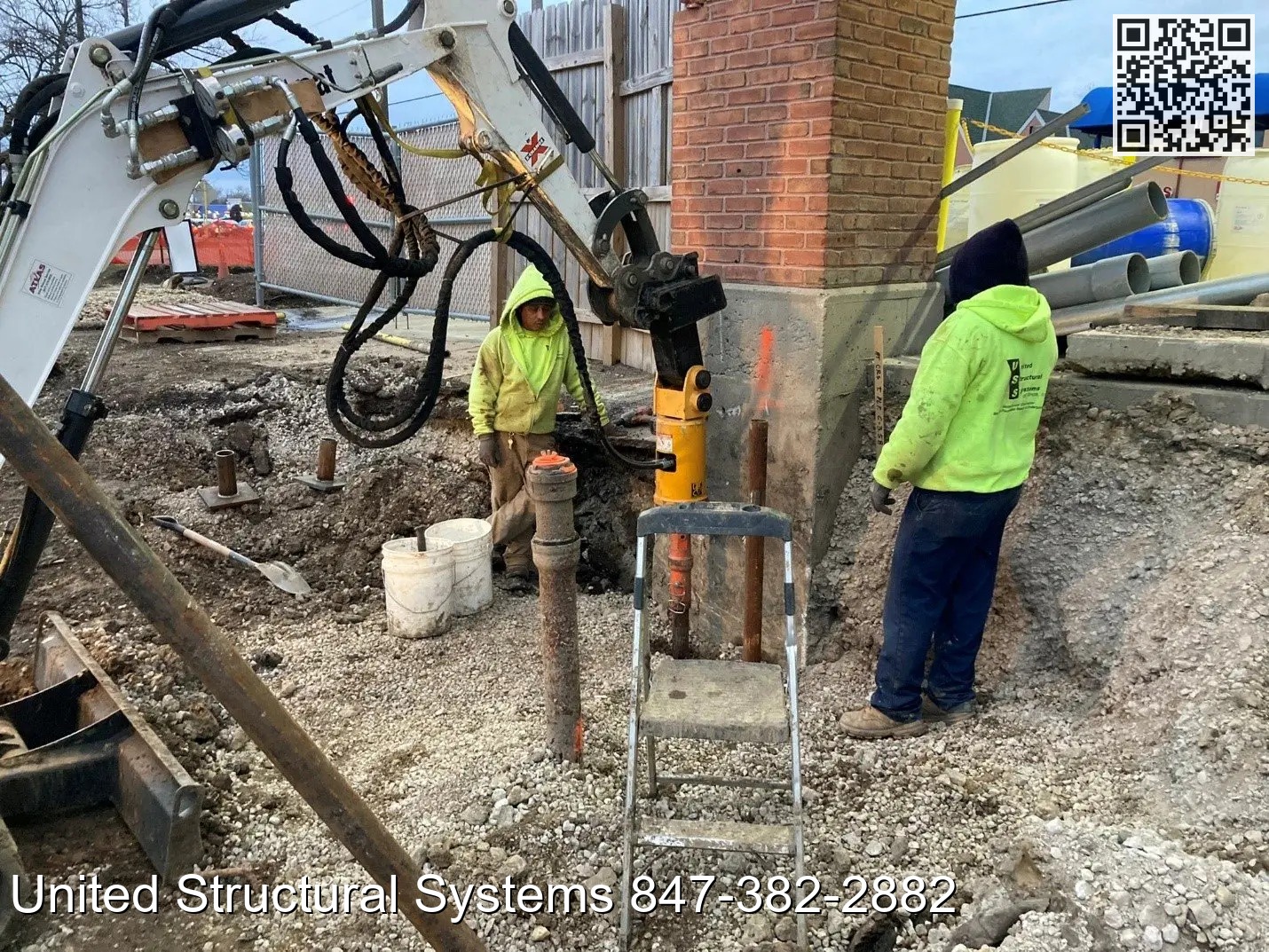
In each situation, the value depends on propelling tension ability versus lateral pressures while maintaining disorder low. That is actually various coming from commercial helical pile installation or even commercial resistance pile installation, which target upright lots help. Helical tiebacks sustain wall structures and also digging bodies; helical piles as well as resistance piles assist columns, slabs, as well as quality beams.
When helical tiebacks are the incorrect tool
They are actually certainly not an universal remedy. Poor applicant disorders consist of really heavy cobble levels that refuse seepage, massive stones, or even highly harsh dirts without a crafted rust planning. If the wall structure is already at the verge of crash with crushed devices as well as inadequate birth control activity, tiebacks alone can easily certainly not wait; you might need to have to fix and integrate steel structures. Where resonance stipulations are excessive, even the modest power from a ride electric motor could be a concern, although this is rare.
Where the layout demands unbelievably high individual capabilities, such as singular supports over 150 to 200 kips in stress, micropiles with casing as well as cement bulb or even punched stone supports might be a lot more practical each capacity. For short-term shoring where deactivating will be required, dirt nails or grouted anchors can surpass in unit cost, especially on huge repetitive keep up easy access.
Reading the dirt, not only the drawings
Most standards revolve around apparent the planet pressure representations and factored loads. Those concern, however effectiveness holds on stratigraphy. Helical anchors need a seasoned bearing level for the helixes. In gentle clays, our experts upsize the coil dimension and also enhance the number of plates, but the design has to still provide sufficient embedment beyond the active wedge. In sands, our team watch for liquefaction possibility as well as drainpipe paths. In layered accounts, it prevails to bypass a silty seam and also pursue the heavy sand at 18 to 25 feet for trustworthy torque correlation.
On a hospital restoration in frosty till, we predrilled aviator holes with a 6-foot cobble band to connect with the thick source below. Predrill carries out certainly not extinguish ability if the coils still nibble right into uninterrupted product at the design deepness, however it asks for careful torque tracking as well as, at times, a changed Kt (the twist connection continuous) based upon industry proof tests.
How helical tiebacks contrast to other support as well as pile systems
Owners and developers typically inquire whether they should utilize helical piles, resistance stacks, micropiles, or even tieback anchors. The response circulates from the lots direction and also constructability constraints.
Commercial helical pile installation and also resistance pile installment address upright loads as well as settlement deal control. Helical piles, with their helical plates, excel in clay-baseds as well as combined soils, could be put in along with reduced noise and vibration, and also offer immediate capability. Resistance piles, or push stacks, build capacity by hoisting steel stacks against the building, displacing ground as opposed to removing it. They are useful for underpinning when clearance is actually tight as well as when the existing structure can easily act as a reaction to steer the piles.
Micropiles, usually steel canvassing with grouted centers, shine in really heavy dirts or even stone, with high allowed lots as well as flexibility for both strain and also squeezing. Micropile installation demands boring, encouragement, and also grout treating, which boosts time but supplies robust functionality in hard geography and also constricted web sites. Micropiles can function as tiebacks along with proper concept, commonly utilized when the needed pressure capability is past typical helical tieback ranges.
Helical tieback anchors sit in the sidewise tons corner. Where you need to have to pull back a wall surface or preserve a digging without heavy tools, they provide you verified, urgent tension capability along with very little spoils. They may complement other deep foundation repair techniques: a wall surface supported along with tiebacks might rest atop a grade beam sustained through helical piles, resistance piles, or micropiles, each playing a specific role.
The auto mechanics of design that concern in the field
The academic edge is familiar: describe the active block, apply the planet tension coefficients, add additional charges, consist of hydrostatic or even seismic parts, and afterwards pick a tieback pattern as well as viewpoint. Virtual, a few details move the needle.
Embedment duration beyond the theoretical failure plane requires margin. Our team target 8 to twelve feet past the position in clay, in some cases more in sand to get to dense strata. The farther the coils sit past the failure wedge, the less delicate they are to tiny inaccuracies in soil parameters.
Helix arrangement is certainly not cosmetic. A two-helix anchor along with 8 as well as 10 inch layers behaves in different ways than a three-helix along with 10, 12, 14 inch plates. Plate spacing of 3 opportunities the diameter minimizes layer overlap in grounds and also increases web capability. In soft clays, larger diameters with greater space execute better, yet disk twist boosts as well as set up devices have to be sized accordingly.
Angle of installation as well as connection duration positioning effect ability and also performance. Steeper slants get to much deeper quicker however may encounter indoor obstacles. A flatter slant minimizes crown elevation inside the structure yet prolongs the support as well as may call for a longer zone beyond the breakdown airplane. Harmonizing angle along with web site geometry is component art, part math.
Corrosion protection can not be a second thought. For long-lasting commercial foundation stabilization, our experts point out hot-dip priming, boosted sacrificial density, and also occasionally a double-correlation technique where anticipated reduction is evaluated over 50 to 75 years. In extremely threatening grounds, utilizing epoxy-coated components or even embedded rays along with grout-filled sleeves might be justified.
Load proof belongs on the important road. Mount torque is a stand-in, certainly not a guarantee. Verification examinations on at least 5 per-cent of anchors, and also efficiency tests on selected sites, lower danger. If movement under evidence load goes over criteria, tighten up the layout before development continues.
Installation realities that separate good from great
Commercial helical tieback anchor installment unfurls nearly similarly each time, yet the end results differ commonly relying on crew adventure and the quality of layout.
Access as well as targeting are the initial restrictions. Inside a cellar, you often work under ray of lights, around mechanicals, and also through stonework centers. Our experts intend core sites to stay away from rebar or even bond beams, use a scanner to map steel, as well as set up walers before teaching to regulate alignment.
Torque monitoring must be disciplined. Use a calibrated digital twist monitor and log analyses at each feet of infiltration. A quick twist spike can easily signal a cobble; a stage in sand might suggest minor failure around the shaft. The top installer makes real-time calls: wiggle out somewhat, readjust speed, or even swap to a different coil setup if you are not achieving the expected torque at style depth.
Grouting is actually not always aspect of helical support job, however some requirements ask for post-grout to improve capability in granular dirts. When made use of, low-mobility cement pumped at the helix elevation can easily lock in functionality. The give-and-take is actually time as well as clean-up.
Head information are where visual appeals as well as upkeep intersect. On exposed indoor walls, our company make use of low-profile platters or even include the anchor scalp into a steel waler repainted to match. On exterior maintaining walls, we strive to break-off plates responsible for a new veneer or capstone to keep the support hardware out of sight as well as out of direct water exposure.
Coordination with various other deep foundation repair trades concerns. If the task also includes commercial helical pile installation for new columns or commercial micro pile installation under a slab, outlined the support supporter styles initially to prevent clashes. It is simpler to switch a heap place just before boring than to reroute a row of tiebacks that actually infiltrate the wall.
A realistic examine capability as well as movement
Owners occasionally expect absolutely no action under bunch. That is certainly not just how soil-structure devices behave. A helical tieback anchor has elastic elongation under tension, plus small seats of plates and also compressibility of the dirt mass. In a regular basement wall surface retrofit, assume a couple of millimeters of draw at evidence load, and also potentially 1 to 3 millimeters much more during lock-off as the wall surface begins to share payload. Those numbers are actually not failures; they show physics.
If you are trying to take a stooped wall surface back to plumb, beware. Pulling also challenging in one shot can easily break down fragile brickwork or even shear supports ahead. Our team stage loads throughout support rows and also monitor split evaluates. Occasionally the best result is stabilization at Commercial Helical Pile Installation the present line, with cosmetics handled by epoxy shot or even masonry fixings. For foundation crack repair, tiebacks quit the root cause of motion; they carry out certainly not "cure" splits. You still require to deal with water control, repointing, or even epoxy as well as carbon thread where appropriate.
Permitting, energies, and risk
Do not bypass electrical finds within as well as outside. Also inside a basement, channels can run in walls as well as slabs. In more mature frameworks, as-built illustrations are actually optimistic fiction. A non-destructive check and also a watchful aviator gap method conserve frustrations. For outside tiebacks crossing feature product lines, safe easements or even use encroachment arrangements. Numerous jurisdictions deal with tiebacks underneath social rights-of-way as encroachments that need completely removable supports or special permits.
Seismic areas bring added inspections. Tiebacks may be component of an overall seismic fortifying package deal, yet design must take into consideration periodic weight results as well as possible loss of easy stress during drinking. In saturated sands, loss of side protection throughout an event may justify deeper embedment and repetitive rows.
Cost and also timetable expectations
Compared to pierced anchors, helical tiebacks often reduced times off the routine because there is actually no cement treatment opportunity just before tons testing and lock-off. In uncomplicated grounds, a two-person crew with the correct drive scalp may put up numerous anchors daily, even more if gain access to is actually excellent and embedment is shallow. Expenses vary commonly by area and also spec, however on industrial projects the device expense lands favourably when capacity demands remain in the 20 to 80 kip selection every support and site strategies are actually tight.
When capacity needs increase or even grounds match infiltration, micropiles or grouted supports may mesmerize in cost-effectiveness. A mixed approach is common: helical tiebacks where access is actually tight as well as loads are actually moderate, micropiles where the loads are actually higher or geology is tough, and helical piles or even resistance piles for vertical assistance. That balance maintains spending plans sensible while satisfying design criteria.
Case snapshots coming from the field
Parking garage keeping wall structure, midtown infill. The wall bulged 1.5 ins at midheight on the lowest amount. Excavation outside the home line was actually impossible. Our experts cored at staggered altitudes, installed helical tiebacks at a 15 level upward angle to hit thick sand at 22 feet, as well as locked off to a steel waler extending column to column. Verification examinations at 1.5 times style lots stabilized within 0.08 inches. The manager resumed gulfs within the week.
Bulkhead rehab at a harbour. Hardwood deadman anchors were actually deteriorated in saltwater dash regions. Our company made use of hot-dip driven helical anchors with extended propitiatory thickness, Check out here put in coming from the dock deck at a superficial angle to reach upland dirts. An ongoing limit network spread loads. Periodic twist spikes signaled stashed debris; our experts changed paths and chronicled torque extensively. The harbour acquired yet another years of service life with low disturbance to tenants.
Historic cellar with rock debris walls. The walls had uneven skins and also lime mortar. Tieback scalps required artistic bearing. Our experts mounted steel walers shimmed to the masonry, secured in stages to prevent standing out rocks, and added interior steel messages under beams assisted through helical piles. The combination of helical tiebacks and helical piles gave the manager both sidewise and also upright stablizing without intrusive excavation.
Integrating tiebacks right into a detailed repair service plan
A prosperous commercial foundation stabilization strategy appears over one's head product. Sidewise restriction coming from tiebacks pairs normally with drainage remodelings to decrease hydrostatic tension. Water is unforgiving: if your wall structure observes groundwater, incorporate boundary empties, sump redundancy, and waterproofing membranes. Inside, deal with architectural constancy. A tieback secured in to a cracked wall structure with no waler or even diaphragm assistance may center tension as well as result in brittle failure.
For jobs along with negotiation and sidewise problems, use the correct mix. A grade beam assisted by helical piles or protection piles takes care of upright bunches as well as stops further settlement. Helical tiebacks deal with sidewise tension. If tons go over traditional helical arrays or even geography dictates, combine micropiles or grouted supports. The goal is actually certainly not to champion one innovation, yet to satisfy the building's necessities along with a worked with system.
Practical checklist for deciding on helical tiebacks
- The driving issue is actually sidewise action, certainly not vertical settlement deal, and digging is actually constricted through powers, home lines, or public access. Subsurface investigation determines a capable bearing layer obtainable with helixes at acceptable torque, beyond the energetic breakdown plane. Required working loads per anchor fit within common helical tieback capacity varies for available devices and team skills. The project benefits from immediate tons confirmation as well as sped up schedule contrasted to grouted systems. Corrosion ailments are actually recognized, and the design includes necessary protection for the wanted company life.
A word on service warranties and also documentation
Owners love assurances. Promotion service warranties you may recognize by regulating variables. Adjust twist equipment, report installation records, always keep proof exam documents, and also picture head particulars before they disappear behind surfaces. Where anchors cross in to social or even border building, always keep authorized easements along with the venture report. For structural foundation repair, that paper trail frequently comes to be as valuable as the steel on its own when the building adjustments hands.
Where foundation crack repair fits
Tiebacks carry out not close gaps, yet they quit the tons that triggered all of them. After stabilization, epoxy treatment may recover massive habits in cement walls if fractures are dry and also clean. In masonry, stitching along with helical pubs set in grout, blended with repointing, delivers constancy. When splits are driven through hydrostatic pressure, incorporate indoor water drainage and outside water-proofing where feasible. It prevails to stage this pattern: support with tiebacks, handle water, at that point restore cracks. That order lessens the odds of re-cracking.
Final thoughts from the field
If the work inquires you to keep back dirt, water, or even a framework that would rather relocate sideways, helical tieback anchors are entitled to a very early appearance. They bring predictable ability, velocity, and also a small jobsite impact. They incorporate well with various other elements of deep foundation repair, consisting of helical piles, resistance stacks, and also micropiles, each loading its street. Their limits are actually as essential as their toughness: geography, deterioration, and also capability targets have to align. When they perform, the end result is actually burning out in the greatest way, a wall surface that remains as well as a client that forgets you were actually ever before there.