Helical tieback anchors seem straightforward theoretically: torque all of them in, exam, lock off, done. Anybody who has mounted them on a commercial website understands the reality is messier. Soil does certainly not review requirements, get access to is actually rarely generous, as well as timetables push crews in to faster ways that turn up later as wall structure movement, water invasion, or neglected tests. After two decades around commercial foundation stabilization as well as deep foundation repair, featuring helical piles, protection wads, and also micropiles, I have an operating listing of errors that cost money and time. A lot of are actually avoidable along with a couple of disciplined inspections and an honest read of the site.
This item transcends universal tips. It concentrates on recurring challenges I observe in commercial helical tieback anchor installation and also the practical methods to avoid them, with references to neighboring bodies like commercial helical pile installation and also commercial micro pile installation when the lesson holds across.
Why tiebacks stop working exams long prior to they stop working the wall
Most tieback breakdowns are actually tolerated when the layout beliefs perform not match field circumstances. I have found tiebacks developed for a sand lens that turned out to be silty sand with a perched water coating, as well as the crew had a hard time to comply with the specified twist. The supervisor included expansions and kept turning, just to come across a heavy gravel seam that overstressed the steel. A neglected bunch examination followed, after that a late scramble to redesign the coils and re-drill gaps via ended up inner parts slabs. None of that is about the wall structure, all of it concerns reading the ground.
Commercial helical tieback anchor setup depends on three traits that may certainly not be actually fabricated: exact soil information, proper anchor geometry for that ground, and setup that complies with the torque as well as positioning demands without improvisation under pressure. If one of those 3 gets jeopardized, the exam jack will certainly present it.
Incomplete or stale subsurface data
The worst blunders start prior to use. Relying upon a single boring or an outdated report can be costly. Soil differs over quick spans, especially on websites along with filler, energies, or previous therapeutic job. I have strolled projects where the geotech's boring was taken 40 feet from the wall structure, across an energy trough backfilled along with smashed rock. The boring presented thick granular soil. The wall surface side was actually gentle clay stuffing. The design asked for two-helix plates and also forecasted 8 kip-ft per foot of embedment twist. The team saw 3 to 4 kip-ft, at that point attacked glossy clay-based and stalled.
If the budget makes it possible for, include at the very least one confirmatory boring or even a few palm auger probings where the tiebacks are going to in fact go. On interior work, a 3-inch center as well as a portable powerful cone penetrometer can easily tell you good enough to adjust the helix dimension as well as space. If you can certainly not add borings, insist on a style along with backups: alternate coil arrangements, approximated torque selections, and a test support schedule to calibrate the manufacturing plan. Gradation supports are especially beneficial in layered soils or even when groundwater varies seasonally.
Poor coil collection for the ground regime
Every anchor installer possesses a beloved pile. That familiarity assists performance, yet it may additionally trap you. Large-diameter helices are actually not regularly better. In loose to tool sands, extra-large plates can easily churn without structure tension. In rigid clay-baseds, way too many platters spaced too carefully may latch the shaft in between helix bearings and also induce buckling under torque.
A typical error is actually utilizing a multi-helix setup along with insufficient spacing. The guideline is one to one and also a half coil sizes in between plates on the very same arrow, along with the lead helix initially right into qualified strata. In overconsolidated clay-baseds, I typically prefer fewer, bigger helices with appropriate spacing. In lumpy soils, a sequence of slightly smaller platters can locate bearing without magnifying the steel. If the work blends clays and also sand joints, take into consideration a sacrificial pilot helix or even a top area that can be swapped after a test install.
Another mistake is skimping on oxidation points to consider when grounds are assertive. Commercial foundation repair commonly takes place in more mature cellars along with high chlorides from deicing sodiums, poor drain, as well as rising and fall pH. If the corrosion assessment presents a need for more thick galvanization or even a propitiatory steel allotment, carry out certainly not reason it away. Tieback anchors live where you can easily certainly not see all of them. The cost to upsize or even indicate hot-dip galvanized parts is actually typically minor relative to opening a completed room a decade later.
Misreading torque and the false comfort of a number
Torque relationship is actually a beneficial device. It is not a promise. The correlation element, Kt, varies extensively along with dirt kind, coil geometry, and also installment procedure. I have actually observed Kt worths coming from as reduced as 6 to as higher as twenty in the same city, relying on whether the ground was desiccated clay or even tidy sand. Handle the pointed out torque as documentation to be verified through bunch screening, not the only aim at that matters.
Two industry actions contort torque readings. Initially, if the support is actually not lined up properly, it may bind in the red as well as make an abrasion spike that resembles birthing resistance. The motor groans, the scale climbs up, yet the helices are certainly not involving entirely in the designated dirt layer. Second, twist bars and assesses loss out of gradation or even read rushing. If you assume an incorrect high reading, pause and also recheck: back off a quarter spin, re-advance, and view whether torque builds steadily. An erratic or spiky sign is a red flag.
On office tasks, I ask the crew to videotape torque every half-foot for the last 3 to 5 feet as well as note any level modifications or even groundwater beads on the device. The notes take seconds and provide circumstance if a proof test underperforms. If the twist plateaued too early, the support could certainly not be serious sufficient or the helix set is actually inappropriate. Catching that before trimming creates all the difference.
Anchors positioned in the wrong ground horizon
Tiebacks derive ability from the coils bearing in experienced dirt past the energetic block behind the wall. Receiving beyond that block is as much a geometric complication as an intensity trouble. A constant error is striving intensity as opposed to casting the coil location along the true setup angle.
On a keeping wall, the energetic wedge could expand 0.6 H to 0.8 H responsible for the wall structure, depending upon backfill as well as drainage. If you set up at a shallow angle to avoid powers, you might wind up along with a long anchor that still lands within that block. The end result is actually a tieback that checks effectively at reduced lots yet creeps throughout hold durations or even programs excessive lock-off losses over the very first couple of weeks.
Always sketch the anchor axis on the section attracting along with the block restriction, powers, and also cellar pieces. When clearance obliges a shallow slant, include size as well as pick a coil arrangement designed for the dirt past the block, certainly not the universal soil profile page. If the geometry is going to not allow you to get to experienced ground without converging a power or even easement, this is where alternate units like micropiles or commercial resistance pile installation can easily hold the bunch via tensioned brackets or even interior walers.
Overlooking groundwater and also in season changes
Water is the silent saboteur. Saturated grounds reduce efficient stress and anxiety and, by extension, anchor capability. Fine-grained dirts that look rigid in overdue summer can act like sleek goo in springtime. A tieback that latched off at 60 kips in October might sneak under the very same tons the adhering to April if the water table rises in to the helix zone.
Simple checks assist. Keep in mind water gloss on spoil, check surrounding sumps, and also videotape the date about damp periods. When doubtful, prepare for a conservative Kt and larger coils or make a screening protocol that includes a longer hold opportunity to monitor creep. On interiors, look at short-lived dewatering in the course of installment so you can seat helices properly. If chronic higher groundwater exists, rust goes up therefore does the value of solitude sleeves near the wall to minimize possible seepage pathways through the penetration.
Sloppy placement and also inadequate supporting during the course of install
The ideal layout can easily certainly not save a poor installment pose. Tiebacks need placement in 3 dimensions: appropriate angle to converge the bearing coating, appropriate azimuth to steer clear of electricals, and square admittance that avoids eccentric filling of the wall relationship. I have found staffs handhold a travel scalp to string around a pipe. The anchor strayed, cut into block centers, as well as left behind a jagged gap. The wall structure layer later had to deal with jagged call, concentrating stress and anxiety and also spalling masonry.
Rig up an easy guide frame. Also a plywood design template with a steel sleeve will certainly always keep the starter area true. For longer supports, a midspan support near the wall surface helps prevent bending over the shaft while twist is used. Bending in the course of installation can reduce the steel's recurring capability and also show up later as a brittle failing under weight testing.
Underestimating wall components and also weight transactions details
Tieback capacity performs not live just in the dirt. The connection issues. For masonry or hollow-core wall structures, birthing plates need to have adequate measurements as well as sometimes squeezing struts to spread tons. In older concrete, carbonation and also rebar rust can easily make near-surface cement weaker than the initial drawings suggest. If the plate attacks in to delicate product, you will definitely find an examination decrease that seems Commercial Helical Pile Installation like support creep however is really wall structure crushing.
Pay attention to the blockout size, embedment of any sort of couplers or sleeves, and the need for cement responsible for the plate. In assertive settings, specify safety caps and sealers around the penetration to decrease water migration. A leaking seepage invites freeze-thaw harm and also future foundation crack repair hassles, especially in commercial basements along with drywall finishes.
Skipping or even abbreviating proof and also efficiency testing
Time pressure kills really good testing. On tiny tasks, the temptation is to verification exam a sample and carry on. That is risky when dirts vary all over the wall or when support slants contrast because of powers. An easy planning goes a very long way: proof exam every anchor to at least 1.25 opportunities the style tons, keep at height for a lowest of 10 minutes, and monitor activity at each increase. For vital structures, add a few performance exams to 1.5 to 2.0 opportunities style bunch along with longer grip durations to evaluate creep.
Watch the bunch tissue and also dial gauge with each other. If the load stores and also motion increases, that is creep. If the tons loses without considerable variation, examine the port and also assesses before condemning the anchor. Maintain a calmness, checklist mindset. List ambient temp, because thermic results on the port and also steel can easily trick brief tests.
Ignoring constructability in the design phase
Designers occasionally define support lengths and also angles that go through effectively in software program however ram truth. Interior cavalcades, ductwork, as well as residential or commercial property lines confine gear setting. On a tight city internet site, you may need a low-clearance travel head, briefer starter areas, and also staged expansions. That slows down production and elevates the per-anchor price. If the timetable does certainly not acknowledge that, shortcuts sneak in: lessened embedment, changed angles, not enough extensions.
Bring the installer in to the talk early. An area walk with the architectural engineer as well as geotechnical developer usually yields smarter details: adjustable walers, alternate support space, or even mixing commercial helical pile installation under the piece with a tieback system to share tons. I have actually utilized hybrid techniques where tiebacks deal with lateral while helical piles or even protection piles sustain verticals coming from internal framework. The substitute could be over-stressing a single system to accomplish both jobs.
Overreliance on one unit when an additional fits better
Helical tieback anchors radiate in numerous situations, but certainly not all. In incredibly heavy gravels and cobbles, the coils may decline before hitting layout intensity, and also the twist demanded threats turning bum rap. In those soils, micropiles or even drilled tiebacks may be actually much more trusted. If a noise stipulation prevents percussive exploration for micropiles, you can easily in some cases blend methods: utilize helical anchors where greats dominate and switch over to micropiles in cobble zones. Being stiff concerning device commitment is a mistake.
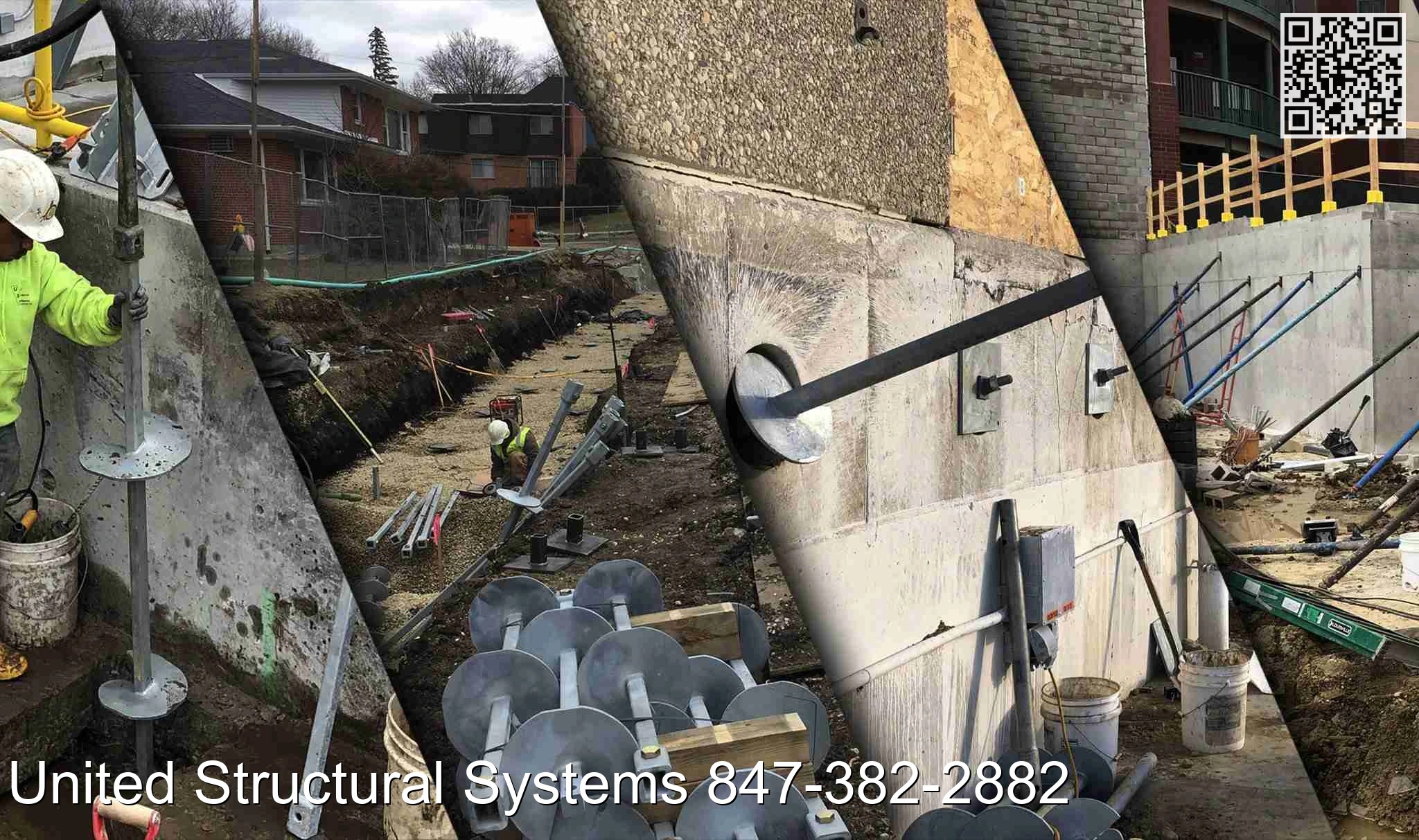
Similar reasoning uses when a wall structure needs to have both vertical and also side assistance. Industrial micropile installation may deliver pressure and also compression with minimal vibration when the website is sensitive. Commercial resistance pile installation operates properly for upright lots move where there is poor overhanging space. Opting for the appropriate resource belongs to performing commercial foundation stabilization responsibly.
Neglecting corrosion defense and also long-lasting maintenance
Tiebacks frequently sit in wet backfill with sodiums, plant foods, and periodic hydrocarbon spills. Mild steel is going to go through over many years. When the job expects a long life span, indicate duplex security where called for: hot-dip driven steel incorporated along with epoxy covering or even cement encapsulation where codes need it. On some internal ventures, I have utilized plastic isolation sleeves along bum rap near the wall to minimize galvanic coupling to embedded rebar.
If a building's servicing planning overlooks the drainage and surface situations above the anchor region, ability deteriorates. Promote managers to preserve seamless gutters, downspouts, as well as beneficial grading. A great deal of structural foundation repair begins along with water, not steel. It is actually unglamorous tips, yet it prevents call-backs.
Cutting corners on documentation
The fastest path to conflicts is unstable documents. Daily logs that tape-record torque-depth profiles, travel scalp design and also calibration date, dirt reviews, and verification exam results develop a straightforward past history. Images of each anchor site just before and also after mount, including the wall surface plate and sealer, return when a potential lessee remodels and asks what is behind the drywall.
For office tasks along with creditors or even social mistake, tidy paperwork rates approvals as well as payments. It additionally allows the developer of file to change designs on the fly along with confidence, as opposed to halting work with a full redesign when a few calibration supports will suffice.
Overlooking the structure's global behavior
Engineers at times evaluate lateral restriction in isolation. If the wall structure wishes to move as a result of global settlement deal, a tieback is going to share in that account. When the slab loses as a result of gentle fill, tiebacks hook up a relocating wall structure to a moving floor, and new cracks show up in another place. In those cases, matching tiebacks along with helical piles or micropiles to re-level and also support interior beams develops a steady unit. Commercial foundation repair is actually hardly ever a single-thread problem. A quick architectural evaluation of bunch roads can easily record mismatches where a tieback will be actually asked to accomplish greater than avoid sidewise earth pressure.
Practical gates that prevent very most problems
A workers foreman the moment informed me he really wanted a five-minute habit at the beginning as well as end of each support. He was right. It reduced our rework cost by fifty percent on a busy city project. These are actually the alcoholic steps that matter most.
- Before put in: verify position and azimuth with a simple jig, validate ground desires versus any kind of probing or prior anchors, check out torque instrumentation and drive head stress, and affirm components accessible matches the submittal. During mount: file twist every foot, reduce with anticipated bearing levels, always keep bum rap bandaged near the wall, as well as stop if twist spikes erratically to re-evaluate. After put in: trim at the appropriate projection, well-maintained the bearing surface area, install the plate amount, proof examination to the strategy along with assessed keeps, and close the infiltration versus water.
Keep it easy and also regular. Many industrial groups can execute this without modifying the schedule.
When tiebacks converge with other restorative work
Complex projects seldom involve one trade. Basement waterproofing, electrical relocations, as well as indoor fit-outs overlap with anchor work. The tieback penetrations require sychronisation along with membranes as well as protection. If a blindside membrane exists responsible for a brand new wall, pre-plan sleeves and seals. Coordinate with waterproofers on guides and also sealers appropriate along with driven steel. Nothing strains customer connections like a brand new leak mapped to a badly secured anchor sleeve that traverses a membrane.
Foundation fracture fixing usually areas in tandem with lateral stabilization. Securing a wall with tiebacks can shut gaps, yet it performs not fix all of them. Epoxy treatment or even urethane grouting may be needed, depending on whether the fracture is structural or even merely a water course. Series issues: support initially, at that point fix cracks, after that restore coatings. If settlement deal provided, add helical piles or micropiles as required to deal with the vertical component.
Training the team to check out the ground
Technical standards can easily not replace field intuitiveness. The most ideal installers have a taste of exactly how the torque ought to construct and what various grounds aroma and resemble. Damp, natural fill possesses a sour scent as well as smears; well-maintained sand feels sandy and drops off the resource in dry grains. The instant a staff knows to correlate these sensory hints along with twist logs and exam results, top quality improves.
Invest a couple of hours at the start of a work to calibrate. Put in a number of test supports, log meticulously, and acquire the crew around the proof exam. Talk via what the varieties imply. If you also install helical piles, protection heaps, or even micropiles, portion trainings throughout bodies. The dirt performs not care what the item is actually named. It replies to efficient worry, drainage, as well as density.
Common failing accounts, as well as what they teach
A mid-rise auto parking design had actually a stooped basement wall structure due to years of bad water drainage. The design called for helical tiebacks along with two 12-inch helices. The team mounted to twist but latched off at 50 kips and also observed 2 to 3 sixteenths of an in of action during the 10-minute hold. The expectation was soft clay creep. The genuine cause was the wall plate bearing on a spalled cement skin. As soon as our team nicked and also patched the confront with a high-strength repair work mortar and upsized the plate by 25 percent, tests passed along with marginal activity. Course: not all "anchor activity" is in the ground.
On yet another job, a historical brick exterior called for tiebacks put up coming from the inside through a narrow basement passage. The operator can not maintain the specified 15-degree downward slant, thus he went for near-horizontal. The supports theoretically hit the layout span, but the coils sat inside the energetic block. Within three months, horizontal splits developed near the tieback elevation. Our team switched out the shallow anchors with a mix of deeper tiebacks and also a handful of internal micropiles with a steel waler. Training: geometry beats depth when it comes to energetic wedge avoidance.
A 3rd scenario included commercial helical pile installation on interior pillars coupled with tiebacks along a bearing wall. The heaps went perfectly, guide to helical tieback anchor installation however the tiebacks struggled through layers of gravel. Twist spiked unpredictably, and a shaft turned. Shifting to a bored, grouted tieback with a small rotating rig for that zone spared the schedule. Course: do certainly not oblige a helical answer with cobbles when a replacement is actually available.
Where requirements typically mislead
Several conventional specifications include blanket torque-to-capacity correlations as well as universal grip opportunities. They work beginning points, not gospel. In logical dirts, creep actions matters greater than peak proof tons. In lumpy grounds, the capacity is actually more conscious efficient stress and also drain. If the spec carries out not mention seasonal water level improvements or oxidation classification, push for an addendum.
Similarly, some delegations play down equipment levels, thread being compatible, and also wall surface plate monotony. If the plate flexes under tons, it will unwind when you remove the jack, bring about disappointing lock-off worths. A slightly more thick plate or a stiffener rib is a small potatoes that produces predictable results.
Bridging to surrounding devices without confusion
Clients often hear a growth of terms: helical pile, helical tieback, resistance pile, micro pile, micropiles, tieback anchors, helical anchors. In simple terms, piles mostly handle upright tons, tiebacks handle lateral bunches in tension. Helical piles and also helical tiebacks share components, however their geometry as well as hookups contrast. Protection piles are actually mounted in against a property to create capacity by end bearing as well as abrasion, useful when cost is actually confined. Micropile installation includes bored, grouted, typically steel-reinforced aspects that may take pressure and also squeezing in difficult soils.
On commercial foundation stabilization projects, blending units is certainly not a failure of organizing, it is actually often the indicator of an adapted answer. A basement that possesses each lateral and vertical trouble may need helical tiebacks for the wall surface as well as helical piles under interior beams. If cobbles dominate, micropiles may switch out helicals. The smartest groups know each system's pleasant place as well as limits.
Final ideas coming from the field
Most pricey blunders in commercial helical tieback anchor installation indication back to preventable selections: relying on incomplete subsurface data, driving a one-size-fits-all helix collection, taking torque analyses without situation, or skipping robust screening. Great practice is not complicated. It is actually a behavior. Validate the ground, decide on geometry to match, install along with alignment willpower, exam honestly, as well as paper carefully. When the website asks for a various method, prepare to pivot to micropiles or even protection heaps instead of increasing adverse a struggling method.
Do those points consistently and tiebacks cease being a wager as well as start behaving like the dependable tools they are actually for commercial foundation repair as well as structural foundation repair. The wall remains, the customer lives delighted, and also you spare the allocate the portion of the venture that turns up in photos as opposed to responsible for drywall.